
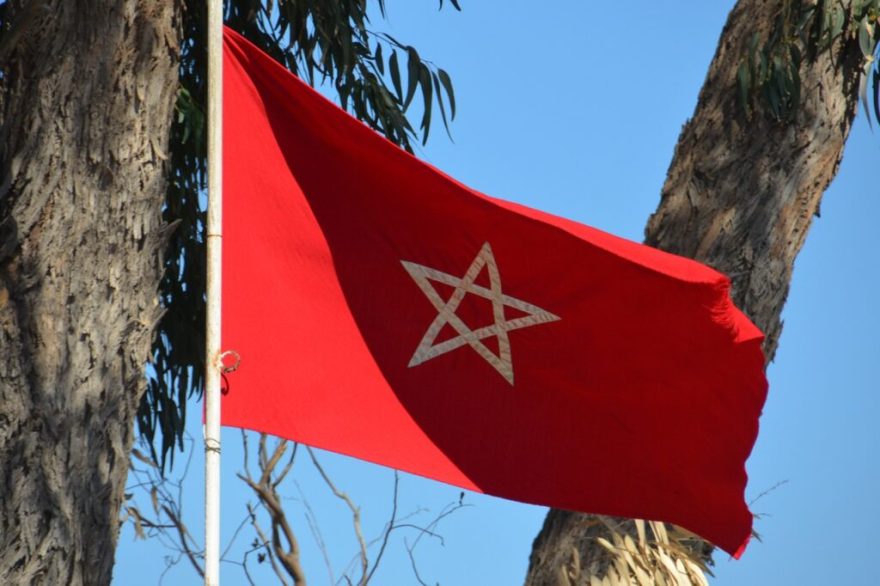
Flag of Morocco
The Flag of Morocco is one of the country’s most recognizable national symbols. It features a red background with a green five-pointed star in the center. Often called the red flag of Morocco, it represents the Kingdom of Morocco and reflects its history, royal heritage, and cultural identity. Although the design is simple, its origins reveal an important part of Morocco past.
Morocco adopted its current flag design on November 17, 1915, during the reign of Sultan Moulay Youssef. The change preserved the traditional red banner while adding a green star to distinguish it from similar flags. Today, the Moroccan flag appears at government buildings, official ceremonies, national celebrations, and international events. Understanding its colors and history offers visitors a useful introduction to the country before exploring its cities, historic sites, and cultural traditions.
What Does the Moroccan Flag Look Like?
The Moroccan flag consists of a solid red field with a green, five-pointed star at its center. The star has an interlaced design, forming a pentagram from five connected lines. One point faces upward, and the green emblem stands out clearly against the red background. The flag has a rectangular shape with a length-to-height ratio of 3:2. Its design contains no additional stripes or separate emblems. Instead, the contrast between the two colors gives the flag its distinctive appearance. The red background preserves a long-standing tradition, while the green star identifies the modern national flag. This combination has remained central to Morocco national identity since the current design was introduced in 1915.
Why Is the Flag of Morocco Red?
Red has a long history in Morocco and a strong association with the country’s monarchy. The Alaouite dynasty, which has ruled Morocco since the 17th century, has historical ties to red banners. Before the current flag appeared, Morocco used a plain red banner as an important state symbol.
When Sultan Moulay Youssef introduced the green star in 1915, the red background remained unchanged. The decision preserved the traditional flag while making it easier to distinguish from other flags, particularly those used as maritime signals. The original royal decree specifically explained this reason for the change.
Some popular explanations associate red with courage, strength, and sacrifice. However, the historical record provides a more direct explanation for the color’s continued use: its longstanding connection with Morocco royal tradition.
What Does the Green Star on the Moroccan Flag Mean?
The green five-pointed star is the most distinctive feature of the Moroccan flag. The original 1915 decree identifies the emblem as the Seal of Solomon and specifies that it should appear in green at the center of the red field. The decree focuses on distinguishing Morocco flag rather than providing a detailed explanation of every symbolic meaning.
Green has strong associations with Islam and appears widely in Islamic art and cultural traditions. The star’s five points are also commonly associated with the Five Pillars of Islam. These interpretations are widely repeated in descriptions of the Moroccan flag, although they should be understood as traditional explanations rather than the complete official definition of the symbol. The combination of the red background and green star brings together Morocco historical flag tradition and a distinctive emblem that remains recognizable around the world.
History of the Red Flag of Morocco
Morocco used red banners long before adopting its current national flag. The color became closely associated with the country’s ruling tradition, particularly under the Alaouite dynasty. For centuries, a plain red banner served as an important symbol before the modern design introduced the green star.
By the early 20th century, the plain red flag could be confused with other flags, including those used for maritime signals. To address this issue, Sultan Moulay Youssef issued a royal decree on November 17, 1915, adding the green five-pointed Seal of Solomon to the center of the flag. The change preserved the traditional background while giving Morocco a more distinctive national symbol.
Morocco gained independence in 1956 after the French and Spanish protectorate period. The flag continued to represent the country’s sovereignty and identity following independence. Its familiar red background and green star remain the defining features of the national flag today.
When Was the Moroccan Flag Adopted?
Morocco adopted its current flag design on November 17, 1915. Sultan Moulay Youssef authorized the addition of the green star to the traditional red banner. This date marks the introduction of the modern design, not the beginning of Morocco use of red flags. Red banners had already played an important role in the country’s history. The 1915 decree introduced the central emblem that distinguishes the Moroccan flag today.
The Importance of the Moroccan Flag Today
The Moroccan flag appears outside public institutions, at official ceremonies, and during national celebrations. It also represents the country at international sporting competitions and diplomatic events. In these settings, it identifies Morocco and its representatives.
For Moroccans, the flag can express national pride, shared history, and a connection to their homeland. For Moroccans living abroad, it can also represent cultural roots and a lasting connection to the country. Its design has remained familiar for more than a century, making it an enduring symbol of national identity.
Travelers can learn more about Morocco by exploring the history behind its national symbols, architecture, and traditions. The Journeys To Morocco travel blog offers additional travel guides and information for visitors who want to understand the country before their trip.
Discover Morocco Beyond Its National Flag
The red flag of Morocco tells a story of historical continuity and national identity. Its red background reflects a longstanding royal tradition, while the green star distinguishes the modern design adopted in 1915. Together, these elements form a national symbol that continues to represent Morocco at home and abroad. Learning about the flag is one way to understand the country’s history before visiting its historic cities, traditional medinas, and desert regions. Travelers interested in exploring Morocco can learn more about Journeys To Morocco, which
